
AEST to NZDT Converter
Quick answers
Selected conversion
The selected date and time will appear here when the converter loads.
AEST and NZDT examples
These examples always use AEST (UTC+10) and NZDT (UTC+13). They stay the same when you change the date or time above. The selected conversion may differ when daylight saving time applies.
AEST is 3 hours behind NZDT.
How the time difference changes
Depending on seasonal clock changes, AEST is 2 hours behind NZST or AEST is 3 hours behind NZDT.
Depending on seasonal clock changes, working hours of 9:00 am to 5:00 pm in AEST correspond to 11:00 am to 7:00 pm in NZST or working hours of 9:00 am to 5:00 pm in AEST correspond to 12:00 pm to 8:00 pm in NZDT.
Compare AEST time with NZDT time, including current local time, UTC offsets, time difference, daylight saving changes, working hours, and shareable meeting times.
Time Difference
Australian Eastern Standard Time is 3 hours behind New Zealand Daylight Time
1:30 pm13:30 in AEST is 4:30 pm16:30 in NZDT
AEST to NZDT call time
Best time for a conference call or a meeting is between 9am-2pm in AEST which corresponds to 12pm-5pm in NZDT
1:30 pm13:30 Australian Eastern Standard Time (AEST). Offset UTC +10:00 hours
4:30 pm16:30 New Zealand Daylight Time (NZDT). Offset UTC +13:00 hours
1:30 pm13:30 AEST / 4:30 pm16:30 NZDT
| AEST | NZDT |
|---|---|
| 12am (midnight) | 3am |
| 1am | 4am |
| 2am | 5am |
| 3am | 6am |
| 4am | 7am |
| 5am | 8am |
| 6am | 9am |
| 7am | 10am |
| 8am | 11am |
| 9am | 12pm (noon) |
| 10am | 1pm |
| 11am | 2pm |
| 12pm (noon) | 3pm |
| 1pm | 4pm |
| 2pm | 5pm |
| 3pm | 6pm |
| 4pm | 7pm |
| 5pm | 8pm |
| 6pm | 9pm |
| 7pm | 10pm |
| 8pm | 11pm |
| 9pm | 12am (midnight) |
| 10pm | 1am |
| 11pm | 2am |
| 00:00 | 03:00 |
| 01:00 | 04:00 |
| 02:00 | 05:00 |
| 03:00 | 06:00 |
| 04:00 | 07:00 |
| 05:00 | 08:00 |
| 06:00 | 09:00 |
| 07:00 | 10:00 |
| 08:00 | 11:00 |
| 09:00 | 12:00 |
| 10:00 | 13:00 |
| 11:00 | 14:00 |
| 12:00 | 15:00 |
| 13:00 | 16:00 |
| 14:00 | 17:00 |
| 15:00 | 18:00 |
| 16:00 | 19:00 |
| 17:00 | 20:00 |
| 18:00 | 21:00 |
| 19:00 | 22:00 |
| 20:00 | 23:00 |
| 21:00 | 00:00 |
| 22:00 | 01:00 |
| 23:00 | 02:00 |
Australian Eastern Standard Time
Offset: AEST is 10 hours ahead Greenwich Mean Time (GMT) and is used in Australia
Countries using this time zone: Australia
Principal Cities: The largest city in the AEST time zone is Sydney in Australia, with about 5.639 million people. Other major cities in this time zone include Melbourne, Brisbane, Gold Coast, Newcastle.
Daylight Saving: This is a standard time zone. During summer, some places set clocks forward one hour for daylight saving time and observe Australian Eastern Daylight Time (AEDT).
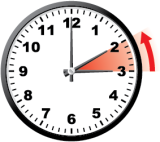 Start: Australian Eastern Standard Time (AEST) started on Sunday, April 5, 2026 at 3:00 am local time and clocks were set one hour back to Sunday, April 5, 2026, 2:00 am. Standard time starts annually on the first Sunday of April.
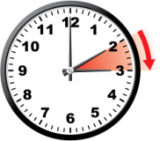 End: Australian Eastern Standard Time (AEST) ends on Sunday, October 4, 2026 at 2:00 am local time and clocks are set one hour forward to Sunday, October 4, 2026, 3:00 am local daylight time instead. Standard time ends annually on the first Sunday of October.
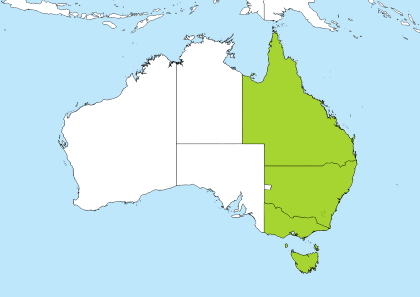
Australian Eastern Standard Time (AEST) is used in Queensland, Victoria, Tasmania, New South Wales (except Broken Hill), Australian Capital Territory and in folling major cities Brisbane, Sydney, Melbourne, Hobart, Canberra
Only part of Australia observe daylight saving. It is used in New South Wales, Victoria, South Australia, Tasmania, and the Australian Capital Territory. Daylight saving is not observed in Queensland, Western Australia or the Northern Territory.
AEST representations, usage and related time zones
- +10 - basic short
- +1000 - basic
- +10:00 - extended
- +1000 - sign character (+) followed by a four digit time providing hours (10) and minutes (00) of the offset. Indicates an offset of ten hours to the east of the zero meridian.
- Kilo - Military abbreviation for AEST
- K - short form of 'Kilo'
- Antarctica/Macquarie
- Australia/ACT
- Australia/Brisbane
- Australia/Canberra
- Australia/Currie
- Australia/Hobart
- Australia/Lindeman
- Australia/Melbourne
- Australia/NSW
- Australia/Queensland
- Australia/Sydney
- Australia/Tasmania
- Australia/Victoria
- AEST - Australian Eastern Standard Time
- CHUT - Chuuk Time
- ChST - Chamorro Standard Time
- K - Kilo Time Zone
- KDT - Korea Daylight Time
- PGT - Papua New Guinea Time
- VLAT - Vladivostok Time
- YAKST - Yakutsk Summer Time
- YAPT - Yap Time
New Zealand Daylight Time
Offset: NZDT is 13 hours ahead Greenwich Mean Time (GMT) and is used in Pacific
Countries using this time zone: Antarctica, New Zealand
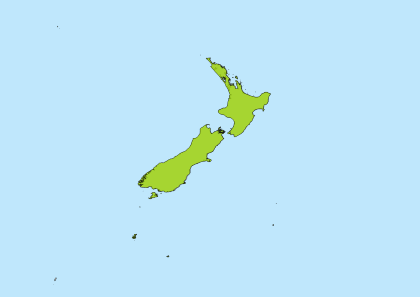
Principal Cities: The largest city in the NZDT time zone is Auckland in New Zealand, with about 1.547 million people. Other major cities in this time zone include Christchurch, Wellington, Hamilton, Tauranga.
Daylight Saving: New Zealand Daylight Time (NZDT) is a daylight saving/summer time zone. During winter, some places set clocks back one hour and observe New Zealand Standard Time (NZST).
Start: New Zealand Daylight Time (NZDT) started on Sunday, September 27, 2026 at 2:00 am local time and clocks were set one hour forward to Sunday, September 27, 2026, 3:00 am. Daylight saving starts annually on the last Sunday of September
End: New Zealand Daylight Time (NZDT) ends on Sunday, April 4, 2027 at 3:00 am local time and clocks are set one hour back to Sunday, April 4, 2027, 2:00 am local standard time instead. Daylight saving ends annually on the first Sunday of April
NZDT representations, usage and related time zones
- +13 - basic short
- +1300 - basic
- +13:00 - extended
- +1300 - sign character (+) followed by a four digit time providing hours (13) and minutes (00) of the offset. Indicates an offset of thirteen hours to the east of the zero meridian.
- Antarctica/McMurdo
- Antarctica/South_Pole
- NZ
- Pacific/Auckland
- FJST - Fiji Summer Time
- NZDT - New Zealand Daylight Time
- PHOT - Phoenix Island Time
- TKT - Tokelau Time
- TOT - Tonga Time
- WST - West Samoa Time
- WSST - West Samoa Standard Time