
UTC to Melbourne Time Converter
Quick answers
Selected conversion
12:00 pm12:00 UTC (UTC+0), Oct 11, 2026 = 11:00 pm23:00 AEDT (UTC+11), Oct 11, 2026
UTC is 11 hours behind Melbourne.
How the time difference changes
Depending on seasonal clock changes, UTC is 10 hours behind Melbourne or UTC is 11 hours behind Melbourne.
Depending on seasonal clock changes, working hours of 9:00 am to 5:00 pm in UTC correspond to 7:00 pm to 3:00 am (next day) in Melbourne or working hours of 9:00 am to 5:00 pm in UTC correspond to 8:00 pm to 4:00 am (next day) in Melbourne.Depending on seasonal clock changes, working hours of 09:00 to 17:00 in UTC correspond to 19:00 to 03:00 (next day) in Melbourne or working hours of 09:00 to 17:00 in UTC correspond to 20:00 to 04:00 (next day) in Melbourne.
Compare UTC time with Melbourne time, including current local time, UTC offsets, time difference, daylight saving changes, working hours, and shareable meeting times.
Time Difference
Universal Time Coordinated is 11 hours behind AEDT (Australian Eastern Daylight Time).
12:00 pm12:00 in UTC is 11:00 pm23:00 in Melbourne, Australia
UTC to Melbourne call time
Best time for a conference call or a meeting is between 7am-8am07:00-08:00 in UTC which corresponds to 6pm-7pm18:00-19:00 in Melbourne
12:00 pm12:00 Universal Time Coordinated (UTC). Offset UTC 0:00 hours
11:00 pm23:00 AEDT (Australian Eastern Daylight Time) (Melbourne, Australia). Offset UTC +11:00 hours
12:00 pm12:00 UTC / 11:00 pm23:00 Melbourne, Australia
| UTC | Melbourne, Australia |
|---|---|
| 12:00am | 11:00am |
| 1:00am | 12:00pm |
| 2:00am | 1:00pm |
| 3:00am | 2:00pm |
| 4:00am | 3:00pm |
| 5:00am | 4:00pm |
| 6:00am | 5:00pm |
| 7:00am | 6:00pm |
| 8:00am | 7:00pm |
| 9:00am | 8:00pm |
| 10:00am | 9:00pm |
| 11:00am | 10:00pm |
| 12:00pm | 11:00pm |
| 1:00pm | 12:00am |
| 2:00pm | 1:00am |
| 3:00pm | 2:00am |
| 4:00pm | 3:00am |
| 5:00pm | 4:00am |
| 6:00pm | 5:00am |
| 7:00pm | 6:00am |
| 8:00pm | 7:00am |
| 9:00pm | 8:00am |
| 10:00pm | 9:00am |
| 11:00pm | 10:00am |
| 00:00 | 11:00 |
| 01:00 | 12:00 |
| 02:00 | 13:00 |
| 03:00 | 14:00 |
| 04:00 | 15:00 |
| 05:00 | 16:00 |
| 06:00 | 17:00 |
| 07:00 | 18:00 |
| 08:00 | 19:00 |
| 09:00 | 20:00 |
| 10:00 | 21:00 |
| 11:00 | 22:00 |
| 12:00 | 23:00 |
| 13:00 | 00:00 |
| 14:00 | 01:00 |
| 15:00 | 02:00 |
| 16:00 | 03:00 |
| 17:00 | 04:00 |
| 18:00 | 05:00 |
| 19:00 | 06:00 |
| 20:00 | 07:00 |
| 21:00 | 08:00 |
| 22:00 | 09:00 |
| 23:00 | 10:00 |
Universal Time Coordinated
Offset: UTC is 0 hours ahead Greenwich Mean Time (GMT) and is used in Universal
Coordinated Universal Time (UTC) is the world time standard that regulates clocks and time. It is successor to Greenwich Mean Time (GMT). For casual use, UTC is the same as GMT, but is used by the scientific community.
UTC is the time standard commonly used across the world since 1972. It is used in many technical fields, like aviation industry and meteorologists, also used to synchronize time across internet networks.
UTC representations, usage and related time zones
- Z - is the zone designator for the zero UTC/GMT offset, also known as 'Zulu' time
- +00 - basic short
- +0000 - basic
- +00:00 - extended
- +0000 - sign character (+) followed by a four digit time providing hours (00) and minutes (00) of the offset. Indicates the zero UTC/GMT offset.
- Zulu - Military abbreviation for UTC
- Z - short form of 'Zulu'
- Etc/UCT
- Etc/UTC
- Etc/Universal
- Etc/Zulu
- UCT
- UTC
- Universal
- Zulu
- EGST - Eastern Greenland Summer Time
- GMT - Greenwich Mean Time
- WET - Western European Time
- AZOST - Azores Summer Time
- UTC - Universal Time Coordinated
- WT - Western Sahara Standard Time
- Z - Zulu Time Zone
Melbourne Information
Time Zone
AEST - Australian Eastern Standard Time
+10:00 hours during Australian Eastern Standard Time.
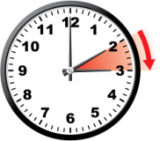 Sunday, October 4, 2026 at 2:00 amSunday, October 4, 2026 at 02:00 local time. DST starts annually on the 1st Sunday of October. Clocks are turned forward 1 hour to Sunday, October 4, 2026 at 3:00 amSunday, October 4, 2026 at 03:00 local daylight time instead. Also called Spring Forward or Summer Time.
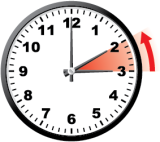 Sunday, April 5, 2026 at 3:00 amSunday, April 5, 2026 at 03:00 local time. DST ends annually on the 1st Sunday of April. Clocks are turned backward 1 hour to Sunday, April 5, 2026 at 2:00 amSunday, April 5, 2026 at 02:00 local standard time instead. Also called Fall Back or switch to Winter Time.