
CET to EGT Converter
Central Europe is on summer time: CEST (UTC+2) until Sun, Oct 25.
Quick answers
Selected conversion
2:00 pm14:00 CEST (UTC+2), Oct 9, 2026 = 11:00 am11:00 EGT (UTC-1), Oct 9, 2026
CEST is 3 hours ahead of EGT.
CET and EGT examples
These examples always use CET (UTC+1) and EGT (UTC-1). They stay the same when you change the date or time above. The selected conversion may differ when daylight saving time applies.
CET is 2 hours ahead of EGT.
How the time difference changes
For most of the year, CEST is 3 hours ahead of EGT. At other times of the year, CET is 3 hours ahead of WGST.
For most of the year, working hours of 9:00 am to 5:00 pm in CEST correspond to 6:00 am to 2:00 pm in EGT. At other times of the year, working hours of 9:00 am to 5:00 pm in CET correspond to 6:00 am to 2:00 pm in WGST.For most of the year, working hours of 09:00 to 17:00 in CEST correspond to 06:00 to 14:00 in EGT. At other times of the year, working hours of 09:00 to 17:00 in CET correspond to 06:00 to 14:00 in WGST.
Compare CET time with EGT time, including current local time, UTC offsets, time difference, daylight saving changes, working hours, and shareable meeting times.
Time Difference
Central European Summer Time is 3 hours ahead of East Greenland Time.
2:00 pm14:00 in CEST is 11:00 am11:00 in EGT
CEST to EGT call time
Best time for a conference call or a meeting is between 12pm-5pm12:00-17:00 in CEST which corresponds to 9am-2pm09:00-14:00 in EGT
2:00 pm14:00 Central European Summer Time (CEST). Offset UTC +2:00 hours
11:00 am11:00 East Greenland Time (EGT). Offset UTC -1:00 hours
2:00 pm14:00 CEST / 11:00 am11:00 EGT
| CEST | EGT |
|---|---|
| 12:00am | 9:00pm |
| 1:00am | 10:00pm |
| 2:00am | 11:00pm |
| 3:00am | 12:00am |
| 4:00am | 1:00am |
| 5:00am | 2:00am |
| 6:00am | 3:00am |
| 7:00am | 4:00am |
| 8:00am | 5:00am |
| 9:00am | 6:00am |
| 10:00am | 7:00am |
| 11:00am | 8:00am |
| 12:00pm | 9:00am |
| 1:00pm | 10:00am |
| 2:00pm | 11:00am |
| 3:00pm | 12:00pm |
| 4:00pm | 1:00pm |
| 5:00pm | 2:00pm |
| 6:00pm | 3:00pm |
| 7:00pm | 4:00pm |
| 8:00pm | 5:00pm |
| 9:00pm | 6:00pm |
| 10:00pm | 7:00pm |
| 11:00pm | 8:00pm |
| 00:00 | 21:00 |
| 01:00 | 22:00 |
| 02:00 | 23:00 |
| 03:00 | 00:00 |
| 04:00 | 01:00 |
| 05:00 | 02:00 |
| 06:00 | 03:00 |
| 07:00 | 04:00 |
| 08:00 | 05:00 |
| 09:00 | 06:00 |
| 10:00 | 07:00 |
| 11:00 | 08:00 |
| 12:00 | 09:00 |
| 13:00 | 10:00 |
| 14:00 | 11:00 |
| 15:00 | 12:00 |
| 16:00 | 13:00 |
| 17:00 | 14:00 |
| 18:00 | 15:00 |
| 19:00 | 16:00 |
| 20:00 | 17:00 |
| 21:00 | 18:00 |
| 22:00 | 19:00 |
| 23:00 | 20:00 |
Central European Time
Offset: CET is 1 hour ahead Greenwich Mean Time (GMT) and is used in Europe
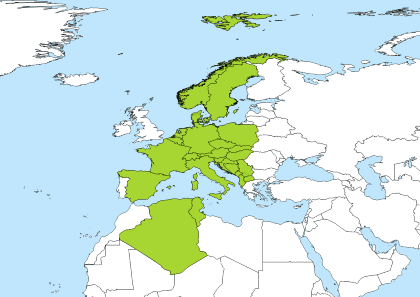
Countries using this time zone: Andorra, Albania, Austria, Bosnia & Herzegovina, Belgium, Switzerland, Czech Republic, Germany, Denmark, Algeria, Spain, France, Gibraltar, Croatia, Hungary, Italy, Liechtenstein, Luxembourg, Monaco, Montenegro, North Macedonia, Malta, Netherlands, Norway, Poland, Serbia, Sweden, Slovenia, Svalbard & Jan Mayen, Slovakia, San Marino, Tunisia, Vatican City
Principal Cities: The largest city in the CET time zone is Berlin in Germany, with about 3.426 million people. Other major cities in this time zone include Madrid, Algiers, Rome, Paris.
German: MEZ - Mitteleuropäische Zeit
Daylight Saving: This is a standard time zone. During summer, some places set clocks forward one hour for daylight saving time and observe Central European Summer Time (CEST).
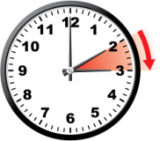 End: Central European Time (CET) ended on Sunday, March 29, 2026 at 2:00 am02:00 local time and clocks were set one hour forward to Sunday, March 29, 2026, 3:00 am03:00 local daylight time instead. Standard time ends annually on the last Sunday of March.
 Start: Central European Time (CET) starts on Sunday, October 25, 2026 at 3:00 am03:00 local time and clocks are set one hour back to Sunday, October 25, 2026, 2:00 am02:00. Standard time starts annually on the last Sunday of October.
CET representations, usage and related time zones
- +01 - basic short
- +0100 - basic
- +01:00 - extended
- +0100 - sign character (+) followed by a four digit time providing hours (01) and minutes (00) of the offset. Indicates an offset of one hour to the east of the zero meridian.
- Alpha - Military abbreviation for CET
- A - short form of 'Alpha'
- Africa/Algiers
- Africa/Ceuta
- Africa/Tunis
- Arctic/Longyearbyen
- Atlantic/Jan_Mayen
- CET
- Europe/Amsterdam
- Europe/Andorra
- Europe/Belgrade
- Europe/Berlin
- Europe/Bratislava
- Europe/Brussels
- Europe/Budapest
- Europe/Busingen
- Europe/Copenhagen
- Europe/Gibraltar
- Europe/Ljubljana
- Europe/Luxembourg
- Europe/Madrid
- Europe/Malta
- Europe/Monaco
- Europe/Oslo
- Europe/Paris
- Europe/Podgorica
- Europe/Prague
- Europe/Rome
- Europe/San_Marino
- Europe/Sarajevo
- Europe/Skopje
- Europe/Stockholm
- Europe/Tirane
- Europe/Vaduz
- Europe/Vatican
- Europe/Vienna
- Europe/Warsaw
- Europe/Zagreb
- Europe/Zurich
- MET
- Poland
- BST - British Summer Time
- CET - Central European Time
- IST - Irish Standard Time
- WEST - Western European Summer Time
- A - Alpha Time Zone
- CET - Central European Time
- MEZ - Mitteleuropäische Zeit
- WAT - West Africa Time
- WST - Western Sahara Summer Time
- BMT - Biel Mean Time
East Greenland Time
Offset: EGT is 1 hour behind Greenwich Mean Time (GMT) and is used in North America
Countries using this time zone: Greenland
Daylight Saving: East Greenland Time (EGT) is a daylight saving/summer time zone. During winter, some places set clocks back one hour and observe Greenland Standard Time (GMT-2).
Start: East Greenland Time (EGT) started on Saturday, March 28, 2026 at 11:00 pm23:00 local time and clocks were set one hour forward to Sunday, March 29, 2026, 12:00 am00:00. Daylight saving starts annually on the last Saturday of March.
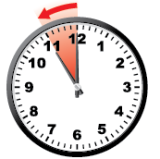 End: East Greenland Time (EGT) ends on Sunday, October 25, 2026 at 12:00 am00:00 local time and clocks are set one hour back to Saturday, October 24, 2026, 11:00 pm23:00 local standard time instead. Daylight saving ends annually on the last Sunday of October.
EGT representations, usage and related time zones
- -01 - basic short
- -0100 - basic
- -01:00 - extended
- -0100 - sign character (-) followed by a four digit time providing hours (01) and minutes (00) of the offset. Indicates an offset of one hour to the west of the zero meridian.
- November - Military abbreviation for EGT
- N - short form of 'November'
- EGT - East Greenland Time
- WGST - Western Greenland Summer Time
- AZOT - Azores Time
- CVT - Cape Verde Time
- N - November Time Zone