
CEST to EDT Converter
Quick answers
Selected conversion
2:00 pm14:00 CEST (UTC+2), Oct 9, 2026 = 8:00 am08:00 EDT (UTC-4), Oct 9, 2026
CEST is 6 hours ahead of EDT.
CEST and EDT examples
These examples always use CEST (UTC+2) and EDT (UTC-4). They stay the same when you change the date or time above. The selected conversion may differ when daylight saving time applies.
CEST is 6 hours ahead of EDT.
How the time difference changes
For most of the year, CEST is 6 hours ahead of EDT. At other times of the year, CET is 6 hours ahead of EST or CET is 5 hours ahead of EDT.
For most of the year, working hours of 9:00 am to 5:00 pm in CEST correspond to 3:00 am to 11:00 am in EDT. At other times of the year, working hours of 9:00 am to 5:00 pm in CET correspond to 3:00 am to 11:00 am in EST or working hours of 9:00 am to 5:00 pm in CET correspond to 4:00 am to 12:00 pm in EDT.For most of the year, working hours of 09:00 to 17:00 in CEST correspond to 03:00 to 11:00 in EDT. At other times of the year, working hours of 09:00 to 17:00 in CET correspond to 03:00 to 11:00 in EST or working hours of 09:00 to 17:00 in CET correspond to 04:00 to 12:00 in EDT.
Compare CEST time with EDT time, including current local time, UTC offsets, time difference, daylight saving changes, working hours, and shareable meeting times.
Time Difference
Central European Summer Time is 6 hours ahead of Eastern Daylight Time.
2:00 pm14:00 in CEST is 8:00 am08:00 in EDT
CEST to EDT call time
Best time for a conference call or a meeting is between 3pm-5pm15:00-17:00 in CEST which corresponds to 9am-11am09:00-11:00 in EDT
2:00 pm14:00 Central European Summer Time (CEST). Offset UTC +2:00 hours
8:00 am08:00 Eastern Daylight Time (EDT). Offset UTC -4:00 hours
2:00 pm14:00 CEST / 8:00 am08:00 EDT
| CEST | EDT |
|---|---|
| 12:00am | 6:00pm |
| 1:00am | 7:00pm |
| 2:00am | 8:00pm |
| 3:00am | 9:00pm |
| 4:00am | 10:00pm |
| 5:00am | 11:00pm |
| 6:00am | 12:00am |
| 7:00am | 1:00am |
| 8:00am | 2:00am |
| 9:00am | 3:00am |
| 10:00am | 4:00am |
| 11:00am | 5:00am |
| 12:00pm | 6:00am |
| 1:00pm | 7:00am |
| 2:00pm | 8:00am |
| 3:00pm | 9:00am |
| 4:00pm | 10:00am |
| 5:00pm | 11:00am |
| 6:00pm | 12:00pm |
| 7:00pm | 1:00pm |
| 8:00pm | 2:00pm |
| 9:00pm | 3:00pm |
| 10:00pm | 4:00pm |
| 11:00pm | 5:00pm |
| 00:00 | 18:00 |
| 01:00 | 19:00 |
| 02:00 | 20:00 |
| 03:00 | 21:00 |
| 04:00 | 22:00 |
| 05:00 | 23:00 |
| 06:00 | 00:00 |
| 07:00 | 01:00 |
| 08:00 | 02:00 |
| 09:00 | 03:00 |
| 10:00 | 04:00 |
| 11:00 | 05:00 |
| 12:00 | 06:00 |
| 13:00 | 07:00 |
| 14:00 | 08:00 |
| 15:00 | 09:00 |
| 16:00 | 10:00 |
| 17:00 | 11:00 |
| 18:00 | 12:00 |
| 19:00 | 13:00 |
| 20:00 | 14:00 |
| 21:00 | 15:00 |
| 22:00 | 16:00 |
| 23:00 | 17:00 |
Central European Summer Time
Offset: CEST is 2 hours ahead Greenwich Mean Time (GMT) and is used in Europe
Countries using this time zone: Andorra, Albania, Austria, Bosnia & Herzegovina, Belgium, Switzerland, Czech Republic, Germany, Denmark, Spain, France, Gibraltar, Croatia, Hungary, Italy, Liechtenstein, Luxembourg, Monaco, Montenegro, North Macedonia, Malta, Netherlands, Norway, Poland, Serbia, Sweden, Slovenia, Svalbard & Jan Mayen, Slovakia, San Marino, Vatican City
Principal Cities: The largest city in the CEST time zone is Berlin in Germany, with about 3.426 million people. Other major cities in this time zone include Madrid, Rome, Paris, Hamburg.
German: MESZ - Mitteleuropäische Sommerzeit
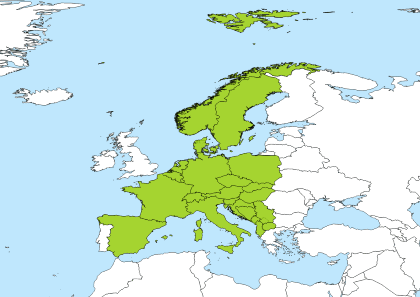
Daylight Saving: Central European Summer Time (CEST) is a daylight saving/summer time zone. During winter, some places set clocks back one hour and observe Central European Time (CET).
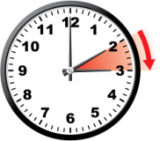 Start: Central European Summer Time (CEST) started on Sunday, March 29, 2026 at 2:00 am02:00 local time and clocks were set one hour forward to Sunday, March 29, 2026, 3:00 am03:00. Daylight saving starts annually on the last Sunday of March.
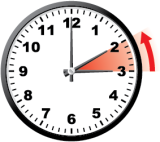 End: Central European Summer Time (CEST) ends on Sunday, October 25, 2026 at 3:00 am03:00 local time and clocks are set one hour back to Sunday, October 25, 2026, 2:00 am02:00 local standard time instead. Daylight saving ends annually on the last Sunday of October.
CEST representations, usage and related time zones
- +02 - basic short
- +0200 - basic
- +02:00 - extended
- +0200 - sign character (+) followed by a four digit time providing hours (02) and minutes (00) of the offset. Indicates an offset of two hours to the east of the zero meridian.
- Bravo - Military abbreviation for CEST
- B - short form of 'Bravo'
- Africa/Ceuta
- Arctic/Longyearbyen
- Atlantic/Jan_Mayen
- CET
- Europe/Amsterdam
- Europe/Andorra
- Europe/Belgrade
- Europe/Berlin
- Europe/Bratislava
- Europe/Brussels
- Europe/Budapest
- Europe/Busingen
- Europe/Copenhagen
- Europe/Gibraltar
- Europe/Ljubljana
- Europe/Luxembourg
- Europe/Madrid
- Europe/Malta
- Europe/Monaco
- Europe/Oslo
- Europe/Paris
- Europe/Podgorica
- Europe/Prague
- Europe/Rome
- Europe/San_Marino
- Europe/Sarajevo
- Europe/Skopje
- Europe/Stockholm
- Europe/Tirane
- Europe/Vaduz
- Europe/Vatican
- Europe/Vienna
- Europe/Warsaw
- Europe/Zagreb
- Europe/Zurich
- MET
- Poland
- CEST - Central European Summer Time
- EET - Eastern European Time
- MESZ - Mitteleuropäische Sommerzeit
- B - Bravo Time Zone
- CAT - Central Africa Time
- IST - Israel Standard Time
- SAST - South Africa Standard Time
- WAST - West Africa Summer Time
Eastern Daylight Time
Offset: EDT is 4 hours behind Greenwich Mean Time (GMT) and is used in North America
Countries using this time zone: Bahamas, Canada, Haiti, Turks & Caicos Is, United States
Principal Cities: The largest city in the EDT time zone is New York City in the United States, with about 8.804 million people. Other major cities in this time zone include Toronto, Brooklyn, Borough of Queens, Montreal.
French: HAE - Heure Avancée de l'Est
Spanish: EDT - Tiempo de verano del Este, ET - Zona Sureste
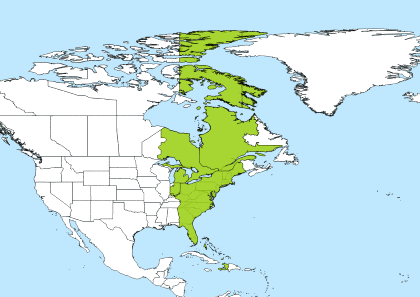
Daylight Saving: Eastern Daylight Time (EDT) is a daylight saving/summer time zone. During winter, some places set clocks back one hour and observe Eastern Standard Time (EST).
Start: Eastern Daylight Time (EDT) started on Sunday, March 8, 2026 at 2:00 am02:00 local time and clocks were set one hour forward to Sunday, March 8, 2026, 3:00 am03:00. Daylight saving starts annually on the second Sunday of March.
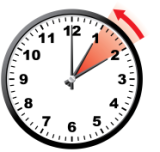 End: Eastern Daylight Time (EDT) ends on Sunday, November 1, 2026 at 2:00 am02:00 local time and clocks are set one hour back to Sunday, November 1, 2026, 1:00 am01:00 local standard time instead. Daylight saving ends annually on the first Sunday of November.
EDT representations, usage and related time zones
- -04 - basic short
- -0400 - basic
- -04:00 - extended
- -0400 - sign character (-) followed by a four digit time providing hours (04) and minutes (00) of the offset. Indicates an offset of four hours to the west of the zero meridian.
- Quebec - Military abbreviation for EDT
- Q - short form of 'Quebec'
- America/Detroit
- America/Fort_Wayne
- America/Grand_Turk
- America/Indiana/Indianapolis
- America/Indiana/Marengo
- America/Indiana/Petersburg
- America/Indiana/Vevay
- America/Indiana/Vincennes
- America/Indiana/Winamac
- America/Indianapolis
- America/Iqaluit
- America/Kentucky/Louisville
- America/Kentucky/Monticello
- America/Louisville
- America/Montreal
- America/Nassau
- America/New_York
- America/Nipigon
- America/Pangnirtung
- America/Port-au-Prince
- America/Thunder_Bay
- America/Toronto
- Canada/Eastern
- EST5EDT
- US/East-Indiana
- US/Eastern
- US/Michigan
- AST - Atlantic Standard Time
- EDT - Eastern Daylight Time
- AMT - Amazon Time
- BOT - Bolivia Time
- CDT - Cuba Daylight Time
- CLT - Chile Standard Time
- FKT - Falkland Island Time
- GYT - Guyana Time
- HLV - Hora Legal de Venezuela
- PYT - Paraguay Time
- Q - Quebec Time Zone
- VET - Venezuelan Standard Time