
UTC to Dakar to AEST to GMT to NZDT to Sydney Time Converter
Eastern Australia is on daylight saving time: AEDT (UTC+11) until Sun, Apr 4, 2027.
Queensland stays on AEST (UTC+10).
Start by searching for a time zone, city, or town.
Add one or more places to compare local times, adjust the date, and share the result.
Quick answers
Selected conversion
12:00 pm12:00 UTC (UTC+0), Nov 29, 2026 = 12:00 pm12:00 GMT (UTC+0), Nov 29, 2026 = 10:00 pm22:00 AEST (UTC+10), Nov 29, 2026 = 12:00 pm12:00 GMT (UTC+0), Nov 29, 2026 = 1:00 am01:00 NZDT (UTC+13), Nov 30, 2026 = 11:00 pm23:00 AEDT (UTC+11), Nov 29, 2026
UTC and Dakar have the same local time. UTC is 10 hours behind AEST. UTC and GMT have the same local time. UTC is 13 hours behind NZDT. UTC is 11 hours behind Sydney.
How the time difference changes
UTC to Dakar
UTC and Dakar have the same time year-round.
Working hours of 9:00 am to 6:00 pm in UTC correspond to 9:00 am to 6:00 pm in Dakar.Working hours of 09:00 to 18:00 in UTC correspond to 09:00 to 18:00 in Dakar.
UTC to AEST
UTC is 10 hours behind AEST year-round.
Working hours of 9:00 am to 6:00 pm in UTC correspond to 7:00 pm to 4:00 am (next day) in AEST.Working hours of 09:00 to 18:00 in UTC correspond to 19:00 to 04:00 (next day) in AEST.
UTC to GMT
UTC and GMT have the same time year-round.
Working hours of 9:00 am to 6:00 pm in UTC correspond to 9:00 am to 6:00 pm in GMT.Working hours of 09:00 to 18:00 in UTC correspond to 09:00 to 18:00 in GMT.
UTC to NZDT
Depending on seasonal clock changes, UTC is 12 hours behind NZST or UTC is 13 hours behind NZDT.
Depending on seasonal clock changes, working hours of 9:00 am to 6:00 pm in UTC correspond to 9:00 pm to 6:00 am (next day) in NZST or working hours of 9:00 am to 6:00 pm in UTC correspond to 10:00 pm to 7:00 am (next day) in NZDT.Depending on seasonal clock changes, working hours of 09:00 to 18:00 in UTC correspond to 21:00 to 06:00 (next day) in NZST or working hours of 09:00 to 18:00 in UTC correspond to 22:00 to 07:00 (next day) in NZDT.
UTC to Sydney
Depending on seasonal clock changes, UTC is 10 hours behind Sydney or UTC is 11 hours behind Sydney.
Depending on seasonal clock changes, working hours of 9:00 am to 6:00 pm in UTC correspond to 7:00 pm to 4:00 am (next day) in Sydney or working hours of 9:00 am to 6:00 pm in UTC correspond to 8:00 pm to 5:00 am (next day) in Sydney.Depending on seasonal clock changes, working hours of 09:00 to 18:00 in UTC correspond to 19:00 to 04:00 (next day) in Sydney or working hours of 09:00 to 18:00 in UTC correspond to 20:00 to 05:00 (next day) in Sydney.
Compare UTC time with Dakar, AEST, GMT, NZDT, and Sydney time, including current local time, UTC offsets, time difference, daylight saving changes, working hours, and shareable meeting times.
Time Difference
Coordinated Universal Time and GMT (Greenwich Mean Time) have the same local time. Coordinated Universal Time is 10 hours behind Australian Eastern Standard Time. Coordinated Universal Time and Greenwich Mean Time have the same local time. Coordinated Universal Time is 13 hours behind New Zealand Daylight Time. Coordinated Universal Time is 11 hours behind AEDT (Australian Eastern Daylight Time).
12:00 pm12:00 in UTC is 12:00 pm12:00 in Dakar, Senegal and is 10:00 pm22:00 in AEST and is 12:00 pm12:00 in GMT and is 1:00 am01:00 in NZDT (next day) and is 11:00 pm23:00 in Sydney, Australia
UTC to Dakar call time
Best time for a conference call or a meeting is between 9am-6pm09:00-18:00 in UTC which corresponds to 9am-6pm09:00-18:00 in Dakar.
UTC to AEST call time
Best time for a conference call or a meeting is between 8am-9am08:00-09:00 in UTC which corresponds to 6pm-7pm18:00-19:00 in AEST. Their 9am–6pm09:00–18:00 working hours do not overlap; this is a suggested compromise.
UTC to GMT call time
Best time for a conference call or a meeting is between 9am-6pm09:00-18:00 in UTC which corresponds to 9am-6pm09:00-18:00 in GMT.
UTC to NZDT call time
Best time for a conference call or a meeting is between 6:30pm-7:30pm18:30-19:30 in UTC which corresponds to 7:30am-8:30am07:30-08:30 in NZDT (next day). Their 9am–6pm09:00–18:00 working hours do not overlap; this is a suggested compromise.
UTC to Sydney call time
Best time for a conference call or a meeting is between 7:30am-8:30am07:30-08:30 in UTC which corresponds to 6:30pm-7:30pm18:30-19:30 in Sydney. Their 9am–6pm09:00–18:00 working hours do not overlap; this is a suggested compromise.
12:00 pm12:00 Coordinated Universal Time (UTC). Offset UTC 0:00 hours
12:00 pm12:00 GMT (Greenwich Mean Time) (Dakar, Senegal). Offset UTC 0:00 hours
10:00 pm22:00 Australian Eastern Standard Time (AEST). Offset UTC +10:00 hours
12:00 pm12:00 Greenwich Mean Time (GMT). Offset UTC 0:00 hours
1:00 am01:00 New Zealand Daylight Time (NZDT). Offset UTC +13:00 hours
11:00 pm23:00 AEDT (Australian Eastern Daylight Time) (Sydney, Australia). Offset UTC +11:00 hours
12:00 pm12:00 UTC / 12:00 pm12:00 Dakar, Senegal / 10:00 pm22:00 AEST / 12:00 pm12:00 GMT / 1:00 am01:00 NZDT (next day) / 11:00 pm23:00 Sydney, Australia
Choose an hour to update the converter. Day labels such as “next day” or “+1” are relative to the selected date in the first column. Use Up and Down arrow keys, Home or End to move between hours, then Enter or Space to select.
| UTC | Dakar, Senegal | AEST | GMT | NZDT | Sydney, Australia |
|---|---|---|---|---|---|
| 12:00am | 10:00am | 12:00am | 1:00pm | 11:00am | |
| 1:00am | 11:00am | 1:00am | 2:00pm | 12:00pm | |
| 2:00am | 12:00pm | 2:00am | 3:00pm | 1:00pm | |
| 3:00am | 1:00pm | 3:00am | 4:00pm | 2:00pm | |
| 4:00am | 2:00pm | 4:00am | 5:00pm | 3:00pm | |
| 5:00am | 3:00pm | 5:00am | 6:00pm | 4:00pm | |
| 6:00am | 4:00pm | 6:00am | 7:00pm | 5:00pm | |
| 7:00am | 5:00pm | 7:00am | 8:00pm | 6:00pm | |
| 8:00am | 6:00pm | 8:00am | 9:00pm | 7:00pm | |
| 9:00am | 7:00pm | 9:00am | 10:00pm | 8:00pm | |
| 10:00am | 8:00pm | 10:00am | 11:00pm | 9:00pm | |
| 11:00am | 9:00pm | 11:00am | 12:00am next day | 10:00pm | |
| 12:00pm | 10:00pm | 12:00pm | 1:00am next day | 11:00pm | |
| 1:00pm | 11:00pm | 1:00pm | 2:00am next day | 12:00am next day | |
| 2:00pm | 12:00am next day | 2:00pm | 3:00am next day | 1:00am next day | |
| 3:00pm | 1:00am next day | 3:00pm | 4:00am next day | 2:00am next day | |
| 4:00pm | 2:00am next day | 4:00pm | 5:00am next day | 3:00am next day | |
| 5:00pm | 3:00am next day | 5:00pm | 6:00am next day | 4:00am next day | |
| 6:00pm | 4:00am next day | 6:00pm | 7:00am next day | 5:00am next day | |
| 7:00pm | 5:00am next day | 7:00pm | 8:00am next day | 6:00am next day | |
| 8:00pm | 6:00am next day | 8:00pm | 9:00am next day | 7:00am next day | |
| 9:00pm | 7:00am next day | 9:00pm | 10:00am next day | 8:00am next day | |
| 10:00pm | 8:00am next day | 10:00pm | 11:00am next day | 9:00am next day | |
| 11:00pm | 9:00am next day | 11:00pm | 12:00pm next day | 10:00am next day | |
| 00:00 | 10:00 | 00:00 | 13:00 | 11:00 | |
| 01:00 | 11:00 | 01:00 | 14:00 | 12:00 | |
| 02:00 | 12:00 | 02:00 | 15:00 | 13:00 | |
| 03:00 | 13:00 | 03:00 | 16:00 | 14:00 | |
| 04:00 | 14:00 | 04:00 | 17:00 | 15:00 | |
| 05:00 | 15:00 | 05:00 | 18:00 | 16:00 | |
| 06:00 | 16:00 | 06:00 | 19:00 | 17:00 | |
| 07:00 | 17:00 | 07:00 | 20:00 | 18:00 | |
| 08:00 | 18:00 | 08:00 | 21:00 | 19:00 | |
| 09:00 | 19:00 | 09:00 | 22:00 | 20:00 | |
| 10:00 | 20:00 | 10:00 | 23:00 | 21:00 | |
| 11:00 | 21:00 | 11:00 | 00:00 next day | 22:00 | |
| 12:00 | 22:00 | 12:00 | 01:00 next day | 23:00 | |
| 13:00 | 23:00 | 13:00 | 02:00 next day | 00:00 next day | |
| 14:00 | 00:00 next day | 14:00 | 03:00 next day | 01:00 next day | |
| 15:00 | 01:00 next day | 15:00 | 04:00 next day | 02:00 next day | |
| 16:00 | 02:00 next day | 16:00 | 05:00 next day | 03:00 next day | |
| 17:00 | 03:00 next day | 17:00 | 06:00 next day | 04:00 next day | |
| 18:00 | 04:00 next day | 18:00 | 07:00 next day | 05:00 next day | |
| 19:00 | 05:00 next day | 19:00 | 08:00 next day | 06:00 next day | |
| 20:00 | 06:00 next day | 20:00 | 09:00 next day | 07:00 next day | |
| 21:00 | 07:00 next day | 21:00 | 10:00 next day | 08:00 next day | |
| 22:00 | 08:00 next day | 22:00 | 11:00 next day | 09:00 next day | |
| 23:00 | 09:00 next day | 23:00 | 12:00 next day | 10:00 next day |
Coordinated Universal Time
Offset: UTC is the same as Greenwich Mean Time (GMT).
Countries using this time zone: Antarctica, Burkina Faso, Faroe Islands, Gambia, Ghana, Greenland, Guernsey, Guinea, Guinea-Bissau, Iceland, Ireland, Isle of Man, Ivory Coast, Jersey, Liberia, Mali, Mauritania, Morocco, Portugal, Saint Helena, São Tomé and Príncipe, Senegal, Sierra Leone, Spain, Togo, United Kingdom, Western Sahara
Principal Cities: The largest city in the UTC time zone is London in the United Kingdom, with about 8.962 million people. Other major cities in this time zone include Abidjan, Bamako, Casablanca, Dakar.
Coordinated Universal Time (UTC) is the world time standard that regulates clocks and time. It is the successor to Greenwich Mean Time (GMT). For casual use, UTC is the same as GMT, but UTC is the standard the scientific community uses.
UTC has been the time standard commonly used across the world since 1972. It is used in many technical fields, such as aviation and meteorology, and to synchronize time across internet networks.
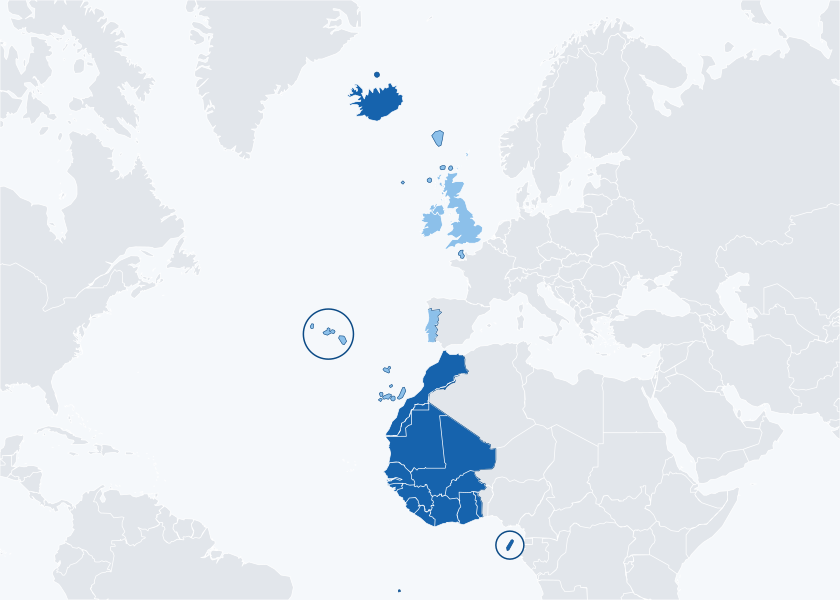
Today some of the lighter areas are on UTC−1.
UTC representations, usage and related time zones
- Z - is the zone designator for the zero UTC/GMT offset, also known as 'Zulu' time
- +00 - basic short
- +0000 - basic
- +00:00 - extended
- +0000 - sign character (+) followed by a four digit time providing hours (00) and minutes (00) of the offset. Indicates the zero UTC/GMT offset.
- Zulu - Military abbreviation for UTC
- Z - short form of 'Zulu'
- Etc/UCT
- Etc/UTC
- Etc/Universal
- Etc/Zulu
- UCT
- UTC
- Universal
- Zulu
- EGST - Eastern Greenland Summer Time
- GMT - Greenwich Mean Time
- WET - Western European Time
- AZOST - Azores Summer Time
- UTC - Coordinated Universal Time
- WT - Western Sahara Standard Time
- Z - Zulu Time Zone
Dakar Time Zone and Facts
Time Zone
Dakar Facts
Australian Eastern Standard Time
Offset: AEST is 10 hours ahead of Greenwich Mean Time (GMT).
Countries using this time zone: Australia
Principal Cities: The largest city in the AEST time zone is Sydney in Australia, with about 5.639 million people. Other major cities in this time zone include Melbourne, Brisbane, Gold Coast, Newcastle.
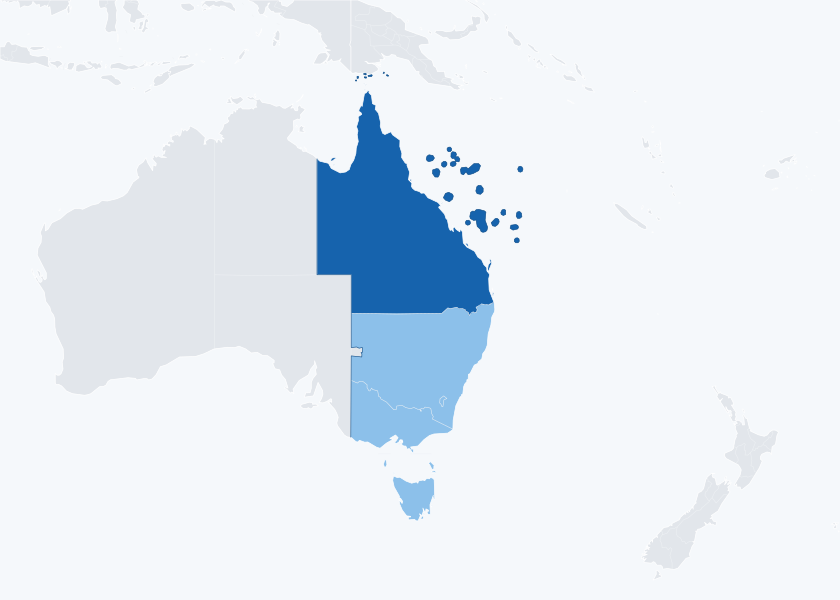
Today the lighter areas are on UTC+11 (AEDT).
Daylight Saving: This is a standard time zone. During summer, some places set clocks forward one hour for daylight saving time and observe Australian Eastern Daylight Time (AEDT).
End: Australian Eastern Standard Time (AEST) ended on Sunday, October 4, 2026 at 2:00 am02:00 local time and clocks were set one hour forward to Sunday, October 4, 2026, 3:00 am03:00 local daylight time instead. Standard time ends annually on the first Sunday of October.
Start: Australian Eastern Standard Time (AEST) starts on Sunday, April 4, 2027 at 3:00 am03:00 local time and clocks are set one hour back to Sunday, April 4, 2027, 2:00 am02:00. Standard time starts annually on the first Sunday of April.
See Australia daylight saving time and upcoming clock changes worldwide.
Australian Eastern Standard Time (AEST) is used in Queensland, Victoria, Tasmania, New South Wales (except Broken Hill), Australian Capital Territory and in folling major cities Brisbane, Sydney, Melbourne, Hobart, Canberra
Only part of Australia observe daylight saving. It is used in New South Wales, Victoria, South Australia, Tasmania, and the Australian Capital Territory. Daylight saving is not observed in Queensland, Western Australia or the Northern Territory.
AEST representations, usage and related time zones
- +10 - basic short
- +1000 - basic
- +10:00 - extended
- +1000 - sign character (+) followed by a four digit time providing hours (10) and minutes (00) of the offset. Indicates an offset of ten hours to the east of the zero meridian.
- Kilo - Military abbreviation for AEST
- K - short form of 'Kilo'
- Antarctica/Macquarie
- Australia/ACT
- Australia/Brisbane
- Australia/Canberra
- Australia/Currie
- Australia/Hobart
- Australia/Lindeman
- Australia/Melbourne
- Australia/NSW
- Australia/Queensland
- Australia/Sydney
- Australia/Tasmania
- Australia/Victoria
- AEST - Australian Eastern Standard Time
- CHUT - Chuuk Time
- ChST - Chamorro Standard Time
- K - Kilo Time Zone
- KDT - Korea Daylight Time
- PGT - Papua New Guinea Time
- VLAT - Vladivostok Time
- YAKST - Yakutsk Summer Time
- YAPT - Yap Time
Greenwich Mean Time
Offset: GMT is the same as Greenwich Mean Time (GMT).
Countries using this time zone: Antarctica, Burkina Faso, Gambia, Ghana, Greenland, Guernsey, Guinea, Guinea-Bissau, Iceland, Ireland, Isle of Man, Ivory Coast, Jersey, Liberia, Mali, Mauritania, Morocco, Saint Helena, São Tomé and Príncipe, Senegal, Sierra Leone, Togo, United Kingdom, Western Sahara
Principal Cities: The largest city in the GMT time zone is London in the United Kingdom, with about 8.962 million people. Other major cities in this time zone include Abidjan, Bamako, Casablanca, Dakar.
Greenwich Mean Time (GMT) originally referred to the mean solar time at the Royal Observatory in Greenwich, London. It is now often used to refer to Coordinated Universal Time (UTC) when this is viewed as a time zone, and in casual use the two are the same. In the military, GMT is known as Zulu time. Greenwich Mean Time was the same as Universal Time (UT), a standard astronomical concept used in many technical fields, until the introduction of UTC in 1972.
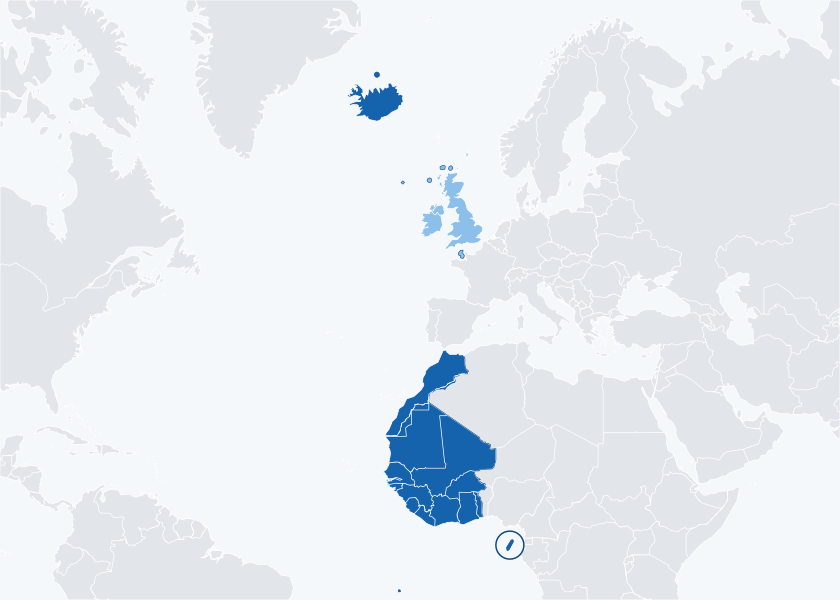
Today all shaded areas are on GMT.
GMT representations, usage and related time zones
- Z - is the zone designator for the zero UTC/GMT offset, also known as 'Zulu' time
- +00 - basic short
- +0000 - basic
- +00:00 - extended
- +0000 - sign character (+) followed by a four digit time providing hours (00) and minutes (00) of the offset. Indicates the zero UTC/GMT offset.
- Zulu - Military abbreviation for GMT
- Z - short form of 'Zulu'
- Africa/Abidjan
- Africa/Accra
- Africa/Bamako
- Africa/Banjul
- Africa/Bissau
- Africa/Conakry
- Africa/Dakar
- Africa/Freetown
- Africa/Lome
- Africa/Monrovia
- Africa/Nouakchott
- Africa/Ouagadougou
- Africa/Sao_Tome
- Africa/Timbuktu
- America/Danmarkshavn
- Atlantic/Reykjavik
- Atlantic/St_Helena
- Eire
- Etc/GMT
- Etc/GMT+0
- Etc/GMT-0
- Etc/GMT0
- Etc/Greenwich
- Europe/Belfast
- Europe/Dublin
- Europe/Guernsey
- Europe/Isle_of_Man
- Europe/Jersey
- Europe/London
- GB
- GB-Eire
- GMT
- GMT+0
- GMT-0
- GMT0
- Greenwich
- Iceland
- EGST - Eastern Greenland Summer Time
- GMT - Greenwich Mean Time
- WET - Western European Time
- AZOST - Azores Summer Time
- UTC - Coordinated Universal Time
- WT - Western Sahara Standard Time
- Z - Zulu Time Zone
New Zealand Daylight Time
Offset: NZDT is 13 hours ahead of Greenwich Mean Time (GMT).
Countries using this time zone: Antarctica, New Zealand
Principal Cities: The largest city in the NZDT time zone is Auckland in New Zealand, with about 1.547 million people. Other major cities in this time zone include Christchurch, Wellington, Hamilton, Tauranga.
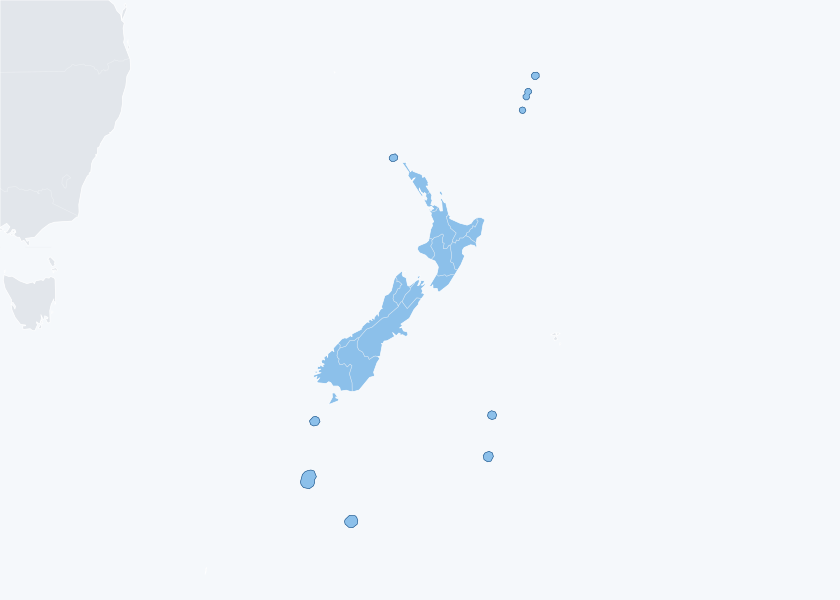
Today all shaded areas are on NZDT.
Daylight Saving: New Zealand Daylight Time (NZDT) is a daylight saving/summer time zone. During winter, some places set clocks back one hour and observe New Zealand Standard Time (NZST).
Start: New Zealand Daylight Time (NZDT) started on Sunday, September 27, 2026 at 2:00 am02:00 local time and clocks were set one hour forward to Sunday, September 27, 2026, 3:00 am03:00. Daylight saving starts annually on the last Sunday of September.
End: New Zealand Daylight Time (NZDT) ends on Sunday, April 4, 2027 at 3:00 am03:00 local time and clocks are set one hour back to Sunday, April 4, 2027, 2:00 am02:00 local standard time instead. Daylight saving ends annually on the first Sunday of April.
See New Zealand daylight saving time and upcoming clock changes worldwide.
NZDT representations, usage and related time zones
- +13 - basic short
- +1300 - basic
- +13:00 - extended
- +1300 - sign character (+) followed by a four digit time providing hours (13) and minutes (00) of the offset. Indicates an offset of thirteen hours to the east of the zero meridian.
- Antarctica/McMurdo
- Antarctica/South_Pole
- NZ
- Pacific/Auckland
- FJST - Fiji Summer Time
- NZDT - New Zealand Daylight Time
- PHOT - Phoenix Island Time
- TKT - Tokelau Time
- TOT - Tonga Time
- WST - West Samoa Time
- WSST - West Samoa Standard Time
Sydney Time Zone and Facts
Time Zone
AEST – Australian Eastern Standard Time, UTC+10 (standard time)