
BST to AEDT to EST to IST Time Converter
Start by searching for a time zone, city, or town.
Add one or more places to compare local times, adjust the date, and share the result.
Quick answers
Selected conversion
1:00 pm13:00 BST (UTC+1), Oct 23, 2026 = 11:00 pm23:00 AEDT (UTC+11), Oct 23, 2026 = 8:00 am08:00 EDT (UTC-4), Oct 23, 2026 = 5:30 pm17:30 IST (UTC+5:30), Oct 23, 2026
BST is 10 hours behind AEDT. BST is 5 hours ahead of EDT. BST is 4 hours and 30 minutes behind IST.
How the time difference changes
BST to AEDT
Depending on seasonal clock changes, BST is 9 hours behind AEST, BST is 10 hours behind AEDT, or GMT is 11 hours behind AEDT.
Depending on seasonal clock changes, working hours of 9:00 am to 6:00 pm in BST correspond to 6:00 pm to 3:00 am (next day) in AEST, working hours of 9:00 am to 6:00 pm in BST correspond to 7:00 pm to 4:00 am (next day) in AEDT, or working hours of 9:00 am to 6:00 pm in GMT correspond to 8:00 pm to 5:00 am (next day) in AEDT.Depending on seasonal clock changes, working hours of 09:00 to 18:00 in BST correspond to 18:00 to 03:00 (next day) in AEST, working hours of 09:00 to 18:00 in BST correspond to 19:00 to 04:00 (next day) in AEDT, or working hours of 09:00 to 18:00 in GMT correspond to 20:00 to 05:00 (next day) in AEDT.
BST to EST
For most of the year, BST is 5 hours ahead of EDT. From Oct 25 to Nov 1, 2026, and from Mar 14 to Mar 28, 2027, GMT is 4 hours ahead of EDT. From Nov 1, 2026 to Mar 14, 2027, GMT is 5 hours ahead of EST.
For most of the year, working hours of 9:00 am to 6:00 pm in BST correspond to 4:00 am to 1:00 pm in EDT. At other times of the year, working hours of 9:00 am to 6:00 pm in GMT correspond to 4:00 am to 1:00 pm in EST or working hours of 9:00 am to 6:00 pm in GMT correspond to 5:00 am to 2:00 pm in EDT.For most of the year, working hours of 09:00 to 18:00 in BST correspond to 04:00 to 13:00 in EDT. At other times of the year, working hours of 09:00 to 18:00 in GMT correspond to 04:00 to 13:00 in EST or working hours of 09:00 to 18:00 in GMT correspond to 05:00 to 14:00 in EDT.
BST to IST
For most of the year, BST is 4 hours and 30 minutes behind IST. From Oct 25, 2026 to Mar 28, 2027, GMT is 5 hours and 30 minutes behind IST.
For most of the year, working hours of 9:00 am to 6:00 pm in BST correspond to 1:30 pm to 10:30 pm in IST. At other times of the year, working hours of 9:00 am to 6:00 pm in GMT correspond to 2:30 pm to 11:30 pm in IST.For most of the year, working hours of 09:00 to 18:00 in BST correspond to 13:30 to 22:30 in IST. At other times of the year, working hours of 09:00 to 18:00 in GMT correspond to 14:30 to 23:30 in IST.
Compare BST time with AEDT, EST, and IST time, including current local time, UTC offsets, time difference, daylight saving changes, working hours, and shareable meeting times.
Time Difference
British Summer Time is 10 hours behind Australian Eastern Daylight Time. British Summer Time is 5 hours ahead of Eastern Daylight Time. British Summer Time is 4 hours and 30 minutes behind India Standard Time.
1:00 pm13:00 in BST is 11:00 pm23:00 in AEDT and is 8:00 am08:00 in EDT and is 5:30 pm17:30 in IST
BST to AEDT call time
Best time for a conference call or a meeting is between 8am-9am08:00-09:00 in BST which corresponds to 6pm-7pm18:00-19:00 in AEDT. Their 9am–6pm09:00–18:00 working hours do not overlap; this is a suggested compromise.
BST to EDT call time
Best time for a conference call or a meeting is between 2pm-6pm14:00-18:00 in BST which corresponds to 9am-1pm09:00-13:00 in EDT
BST to IST call time
Best time for a conference call or a meeting is between 9am-1:30pm09:00-13:30 in BST which corresponds to 1:30pm-6pm13:30-18:00 in IST
1:00 pm13:00 British Summer Time (BST). Offset UTC +1:00 hour
11:00 pm23:00 Australian Eastern Daylight Time (AEDT). Offset UTC +11:00 hours
8:00 am08:00 Eastern Daylight Time (EDT). Offset UTC -4:00 hours
5:30 pm17:30 India Standard Time (IST). Offset UTC +5:30 hours
1:00 pm13:00 BST / 11:00 pm23:00 AEDT / 8:00 am08:00 EDT / 5:30 pm17:30 IST
Choose an hour to update the converter. Day labels such as “next day” or “+1” are relative to the selected date in the first column. Use Up and Down arrow keys, Home or End to move between hours, then Enter or Space to select.
| BST | AEDT | EDT | IST |
|---|---|---|---|
| 10:00am | 7:00pm previous day | 4:30am | |
| 11:00am | 8:00pm previous day | 5:30am | |
| 12:00pm | 9:00pm previous day | 6:30am | |
| 1:00pm | 10:00pm previous day | 7:30am | |
| 2:00pm | 11:00pm previous day | 8:30am | |
| 3:00pm | 12:00am | 9:30am | |
| 4:00pm | 1:00am | 10:30am | |
| 5:00pm | 2:00am | 11:30am | |
| 6:00pm | 3:00am | 12:30pm | |
| 7:00pm | 4:00am | 1:30pm | |
| 8:00pm | 5:00am | 2:30pm | |
| 9:00pm | 6:00am | 3:30pm | |
| 10:00pm | 7:00am | 4:30pm | |
| 11:00pm | 8:00am | 5:30pm | |
| 12:00am next day | 9:00am | 6:30pm | |
| 1:00am next day | 10:00am | 7:30pm | |
| 2:00am next day | 11:00am | 8:30pm | |
| 3:00am next day | 12:00pm | 9:30pm | |
| 4:00am next day | 1:00pm | 10:30pm | |
| 5:00am next day | 2:00pm | 11:30pm | |
| 6:00am next day | 3:00pm | 12:30am next day | |
| 7:00am next day | 4:00pm | 1:30am next day | |
| 8:00am next day | 5:00pm | 2:30am next day | |
| 9:00am next day | 6:00pm | 3:30am next day | |
| 10:00 | 19:00 previous day | 04:30 | |
| 11:00 | 20:00 previous day | 05:30 | |
| 12:00 | 21:00 previous day | 06:30 | |
| 13:00 | 22:00 previous day | 07:30 | |
| 14:00 | 23:00 previous day | 08:30 | |
| 15:00 | 00:00 | 09:30 | |
| 16:00 | 01:00 | 10:30 | |
| 17:00 | 02:00 | 11:30 | |
| 18:00 | 03:00 | 12:30 | |
| 19:00 | 04:00 | 13:30 | |
| 20:00 | 05:00 | 14:30 | |
| 21:00 | 06:00 | 15:30 | |
| 22:00 | 07:00 | 16:30 | |
| 23:00 | 08:00 | 17:30 | |
| 00:00 next day | 09:00 | 18:30 | |
| 01:00 next day | 10:00 | 19:30 | |
| 02:00 next day | 11:00 | 20:30 | |
| 03:00 next day | 12:00 | 21:30 | |
| 04:00 next day | 13:00 | 22:30 | |
| 05:00 next day | 14:00 | 23:30 | |
| 06:00 next day | 15:00 | 00:30 next day | |
| 07:00 next day | 16:00 | 01:30 next day | |
| 08:00 next day | 17:00 | 02:30 next day | |
| 09:00 next day | 18:00 | 03:30 next day |
British Summer Time
Offset: BST is 1 hour ahead of Greenwich Mean Time (GMT).
Countries using this time zone: Guernsey, Isle of Man, Jersey, United Kingdom
Principal Cities: The largest city in the BST time zone is London in the United Kingdom, with about 8.962 million people. Other major cities in this time zone include Birmingham, Glasgow, Manchester, Sheffield.
Current time in the United Kingdom: UK time now
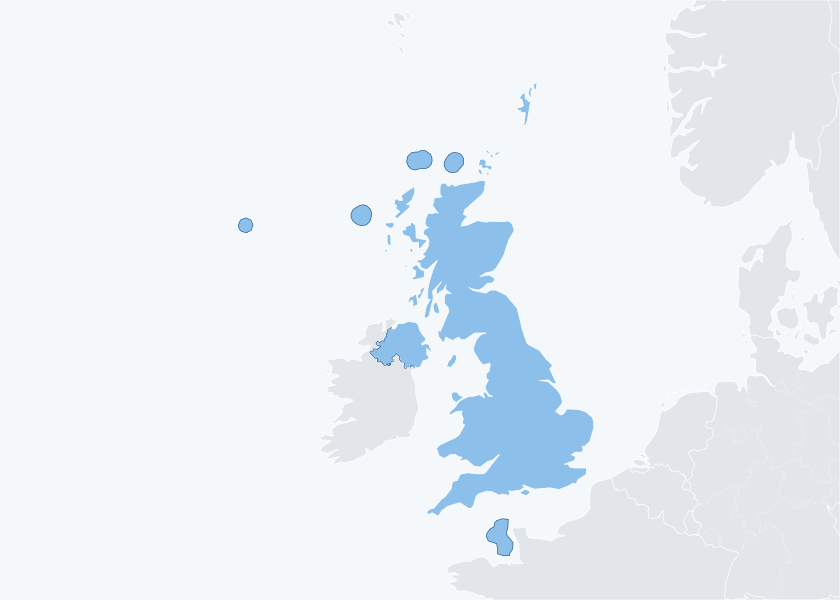
Today all shaded areas are on BST.
Daylight Saving: British Summer Time (BST) is a daylight saving/summer time zone. During winter, some places set clocks back one hour and observe Greenwich Mean Time (GMT).
Start: British Summer Time (BST) started on Sunday, March 29, 2026 at 1:00 am01:00 local time and clocks were set one hour forward to Sunday, March 29, 2026, 2:00 am02:00. Daylight saving starts annually on the last Sunday of March.
End: British Summer Time (BST) ends on Sunday, October 25, 2026 at 2:00 am02:00 local time and clocks are set one hour back to Sunday, October 25, 2026, 1:00 am01:00 local standard time instead. Daylight saving ends annually on the last Sunday of October.
See United Kingdom daylight saving time and upcoming clock changes worldwide.
BST representations, usage and related time zones
- +01 - basic short
- +0100 - basic
- +01:00 - extended
- +0100 - sign character (+) followed by a four digit time providing hours (01) and minutes (00) of the offset. Indicates an offset of one hour to the east of the zero meridian.
- Alpha - Military abbreviation for BST
- A - short form of 'Alpha'
- Europe/Belfast
- Europe/Guernsey
- Europe/Isle_of_Man
- Europe/Jersey
- Europe/London
- GB
- GB-Eire
- British Summer Time - UTC +1
- Bangladesh Standard Time - UTC +6
- Bougainville Standard Time - UTC +11
- BST - British Summer Time
- CET - Central European Time
- IST - Irish Standard Time
- WEST - Western European Summer Time
- A - Alpha Time Zone
- CET - Central European Time
- MEZ - Mitteleuropäische Zeit
- WAT - West Africa Time
- WST - Western Sahara Summer Time
- BMT - Biel Mean Time
Australian Eastern Daylight Time
Offset: AEDT is 11 hours ahead of Greenwich Mean Time (GMT).
Countries using this time zone: Australia
Principal Cities: The largest city in the AEDT time zone is Sydney in Australia, with about 5.639 million people. Other major cities in this time zone include Melbourne, Newcastle, Canberra, Central Coast.
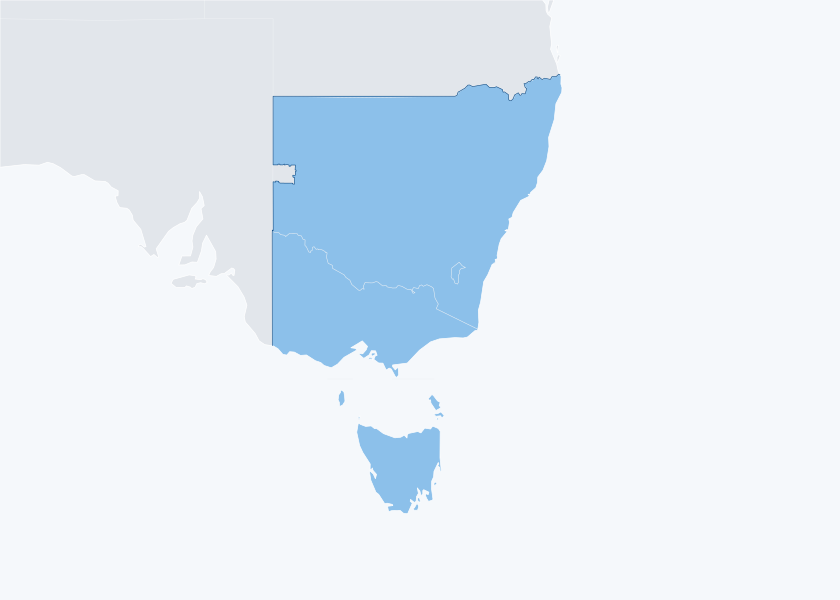
Today all shaded areas are on AEDT.
Daylight Saving: Australian Eastern Daylight Time (AEDT) is a daylight saving/summer time zone. During winter, some places set clocks back one hour and observe Australian Eastern Standard Time (AEST).
Start: Australian Eastern Daylight Time (AEDT) started on Sunday, October 4, 2026 at 2:00 am02:00 local time and clocks were set one hour forward to Sunday, October 4, 2026, 3:00 am03:00. Daylight saving starts annually on the first Sunday of October.
End: Australian Eastern Daylight Time (AEDT) ends on Sunday, April 4, 2027 at 3:00 am03:00 local time and clocks are set one hour back to Sunday, April 4, 2027, 2:00 am02:00 local standard time instead. Daylight saving ends annually on the first Sunday of April.
See Australia daylight saving time and upcoming clock changes worldwide.
Australian Eastern Daylight Time (AEDT) is observer in New South Wales (except Broken Hill and Lord Howe Island), Victoria, Tasmania, Australian Capital Territory, Sydney, Melbourne, Hobart, Canberra AEDT is equal to Coordinated Universal Time plus 11 hours (UTC +11). During a summer time period, these locations move from AEST to Australian Eastern Daylight Time (AEDT), and clocks are advanced to UTC +11.
Daylight saving or summer time is commonly expressed as AEDT (Australian Eastern Daylight Time). In periods of daylight saving an hour is added to the Local Standard Time.
The regulation of time is a State Government responsibility. Changes to the period of daylight saving may be made by regulation. Legislation to harmonise daylight saving in NSW with the south-eastern states and the ACT was passed by the NSW Parliament on 23 October 2007.
History of daylight saving in New South Wales
Daylight saving operated nationally for single summer during World War I from 1 January 1917 to 25 March 1917 and during World War II for three summers in a row, starting on 1 January 1942.
Daylight saving was re-introduced for third time in New South Wales on 31 October 1971 after New South Wales Parliament passed the Standard Time Act 1971.
A referendum held on 1 May 1976 proposed that daylight saving should be on a permanent basis. The ballot paper stated:
"At present there is a period commonly called 'daylight saving' by which time is advanced by one hour for the period commencing on the last Sunday in October in each year and ending on the first Sunday in March in the following year.
Electors were then asked to answer YES or NO to the question: Are you in favour of daylight saving? 1,882,770 electors were in favour, 868,900 were against and 35,507 votes were informal.\"
The period of daylight saving is prescribed by the Daylight Saving Regulations 2008, made under the Daylight Saving Act 2007. Since April 2008, daylight saving has been synchronised across Tasmania, New South Wales, Victoria, the ACT and South Australia, although South Australia remains half an hour behind throughout the year due to the observance of Australian Central Standard Time.
Which is correct Daylight Savings or Daylight Saving (with or without the 's' at the end)? The correct spelling in Australia is without the 's'.
AEDT representations, usage and related time zones
- +11 - basic short
- +1100 - basic
- +11:00 - extended
- +1100 - sign character (+) followed by a four digit time providing hours (11) and minutes (00) of the offset. Indicates an offset of eleven hours to the east of the zero meridian.
- Lima - Military abbreviation for AEDT
- L - short form of 'Lima'
- Antarctica/Macquarie
- Australia/ACT
- Australia/Canberra
- Australia/Currie
- Australia/Hobart
- Australia/Melbourne
- Australia/NSW
- Australia/Sydney
- Australia/Tasmania
- Australia/Victoria
- AEDT - Australian Eastern Daylight Time
- BST - Bougainville Standard Time
- KOST - Kosrae Time
- L - Lima Time Zone
- LHDT - Lord Howe Daylight Time
- MAGT - Magadan Time
- NCT - New Caledonia Time
- NFT - Norfolk Time
- PONT - Pohnpei Standard Time
- SBT - Solomon Islands Time
- VLAST - Vladivostok Summer Time
- VUT - Vanuatu Time
Eastern Standard Time
Offset: EST is 5 hours behind Greenwich Mean Time (GMT).
Countries using this time zone: Bahamas, Canada, Cayman Islands, Haiti, Jamaica, Mexico, Panama, Turks and Caicos Islands, United States
Principal Cities: The largest city in the EST time zone is New York City in the United States, with about 8.804 million people. Other major cities in this time zone include Toronto, Montréal, Philadelphia, Port-au-Prince.
French: HNE - Heure Normale de l'Est
Spanish: ET - Tiempo del Este, ET - Zona Sureste
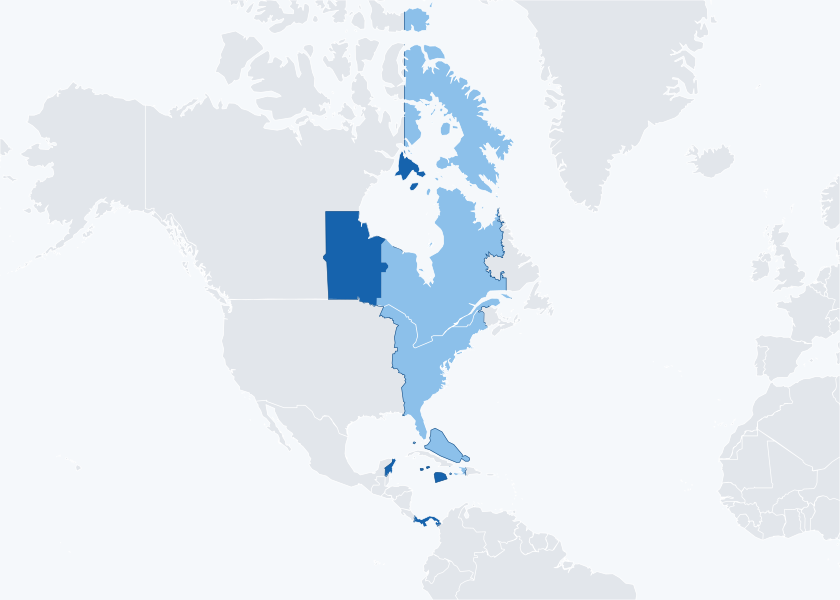
Today the lighter areas are on UTC−4 (EDT).
Daylight Saving: This is a standard time zone. During summer, some places set clocks forward one hour for daylight saving time and observe Eastern Daylight Time (EDT).
End: Eastern Standard Time (EST) ended on Sunday, March 8, 2026 at 2:00 am02:00 local time and clocks were set one hour forward to Sunday, March 8, 2026, 3:00 am03:00 local daylight time instead. Standard time ends annually on the second Sunday of March.
Start: Eastern Standard Time (EST) starts on Sunday, November 1, 2026 at 2:00 am02:00 local time and clocks are set one hour back to Sunday, November 1, 2026, 1:00 am01:00. Standard time starts annually on the first Sunday of November.
See USA daylight saving time and upcoming clock changes worldwide.
EST representations, usage and related time zones
- -05 - basic short
- -0500 - basic
- -05:00 - extended
- -0500 - sign character (-) followed by a four digit time providing hours (05) and minutes (00) of the offset. Indicates an offset of five hours to the west of the zero meridian.
- Romeo - Military abbreviation for EST
- R - short form of 'Romeo'
- America/Atikokan
- America/Cancun
- America/Cayman
- America/Coral_Harbour
- America/Detroit
- America/Fort_Wayne
- America/Grand_Turk
- America/Indiana/Indianapolis
- America/Indiana/Marengo
- America/Indiana/Petersburg
- America/Indiana/Vevay
- America/Indiana/Vincennes
- America/Indiana/Winamac
- America/Indianapolis
- America/Iqaluit
- America/Jamaica
- America/Kentucky/Louisville
- America/Kentucky/Monticello
- America/Louisville
- America/Montreal
- America/Nassau
- America/New_York
- America/Nipigon
- America/Panama
- America/Pangnirtung
- America/Port-au-Prince
- America/Thunder_Bay
- America/Toronto
- Canada/Eastern
- EST
- EST5EDT
- Jamaica
- US/East-Indiana
- US/Eastern
- US/Michigan
- CDT - Central Daylight Time
- EST - Eastern Standard Time
- ET - Eastern Time
- COT - Colombia Time
- CST - Cuba Standard Time
- EASST - Easter Island Summer Time
- ECT - Ecuador Time
- PET - Peru Time
- R - Romeo Time Zone
India Standard Time
Offset: IST is 5 hours and 30 minutes ahead of Greenwich Mean Time (GMT).
Countries using this time zone: India
Principal Cities: The largest city in the IST time zone is Mumbai in India, with about 12.692 million people. Other major cities in this time zone include Delhi, Bengaluru, Hyderabad, Ahmedabad.
Daylight Saving: Clocks in India Standard Time (IST) do not change for daylight saving time, so IST stays the same throughout the year. Other time zones may set clocks forward in summer and back in winter; see upcoming clock changes worldwide.
Current time in India: India time now

IST representations, usage and related time zones
- +0530 - basic
- +05:30 - extended
- +0530 - sign character (+) followed by a four digit time providing hours (05) and minutes (30) of the offset. Indicates an offset of five hours and thirty minutes to the east of the zero meridian.
- Asia/Calcutta
- Asia/Kolkata
- India Standard Time - UTC +5:30
- Irish Standard Time - UTC +1
- Israel Standard Time - UTC +2